

Why Athletes Are Turning to Ashwagandha for Gym Benefits
The modern fitness landscape is witnessing a paradigm shift beyond conventional protein powders and pre-workout stimulants. Elite athletes and weekend warriors alike are increasingly recognizing that muscle growth isn’t solely determined by what happens during your last set—it’s profoundly influenced by hormonal balance and stress management. Enter ashwagandha for muscle growth, an ancient Ayurvedic adaptogen that’s rapidly becoming a staple in serious training protocols.
This powerful herb, scientifically known as Withania somnifera, addresses the often-overlooked catabolic effects of chronic stress on lean tissue. Unlike synthetic anabolic compounds, ashwagandha works synergistically with your body’s endocrine system to optimize the internal environment for hypertrophy. Gym enthusiasts report enhanced mind-muscle connection, improved sleep quality, and noticeably faster recovery between intense training sessions, making it a compelling addition to any performance-focused supplement regimen.
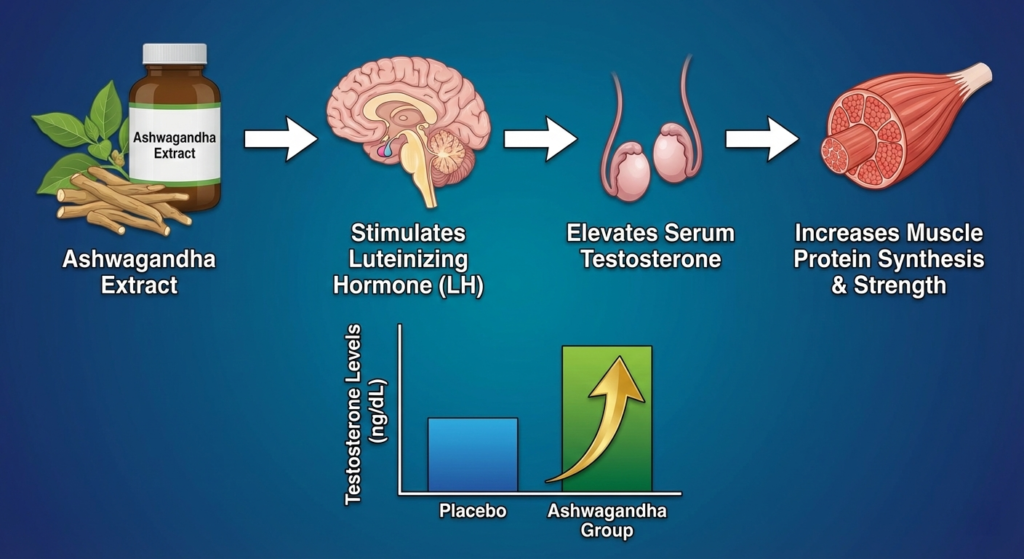
The Testosterone Connection: How Ashwagandha Impacts Muscle Building Hormones
Testosterone remains the primary anabolic driver for muscle protein synthesis, and this is where ashwagandha demonstrates its most impressive physiological effects. Clinical research indicates that consistent supplementation can significantly elevate serum testosterone levels by stimulating luteinizing hormone (LH) production and potentially modulating sex hormone-binding globulin (SHBG). In one landmark study involving resistance-trained men, participants receiving ashwagandha extract showed substantially greater increases in testosterone compared to placebo groups, correlating directly with superior strength outcomes.
The mechanism extends beyond mere stimulation. Ashwagandha appears to enhance testicular antioxidant status, protecting Leydig cells from oxidative damage that naturally occurs during intense physical training. This preservation of cellular integrity ensures sustained testosterone production even during periods of high-volume overreaching. For natural athletes seeking to maximize their anabolic potential without crossing into prohibited substances, optimizing endogenous testosterone through adaptogenic support represents a scientifically sound strategy.
Furthermore, elevated testosterone facilitates greater nitrogen retention and enhanced muscle protein synthesis signaling through mTOR pathways. When combined with progressive overload and adequate caloric intake, these hormonal optimizations create the perfect biochemical storm for hypertrophy. The compound’s ability to simultaneously support thyroid function also contributes to metabolic rate optimization, helping athletes maintain the lean body composition necessary for showcasing hard-earned muscle tissue.
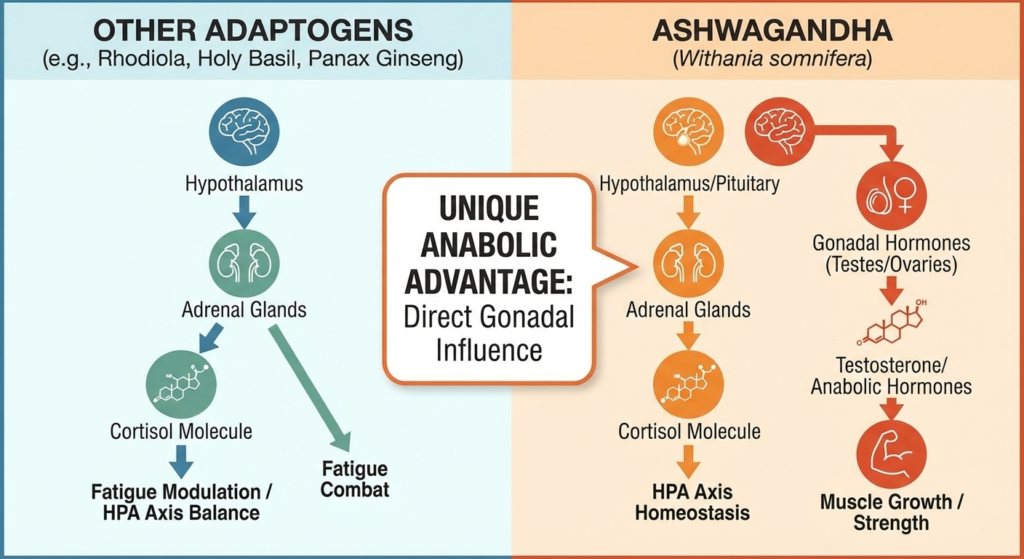
Adaptogens for Muscle: Understanding Ashwagandha’s Place in Performance Botanicals
While the adaptogen category includes formidable contenders like Rhodiola rosea, Holy Basil, and Panax ginseng, ashwagandha distinguishes itself through its unique anabolic profile. Most adaptogens primarily modulate the hypothalamic-pituitary-adrenal (HPA) axis to combat fatigue; however, ashwagandha offers the distinct advantage of directly influencing gonadal hormones while maintaining cortisol homeostasis.
Rhodiola excels at acute fatigue resistance and altitude adaptation, making it ideal for endurance athletes, whereas ashwagandha demonstrates superior efficacy for power output and maximal strength development. Holy Basil (Tulsi) offers impressive anti-inflammatory benefits but lacks the robust clinical evidence for testosterone optimization that ashwagandha possesses. For lifters specifically seeking hypertrophy, ashwagandha’s dual action as both a cortisol manager and testosterone supporter positions it uniquely among botanical performance enhancers.
The root extract’s high concentration of withanolides—specifically withaferin A—provides additional benefits through anti-inflammatory and immunomodulatory pathways that support training consistency. By reducing the systemic inflammation that accompanies heavy resistance training, ashwagandha allows for more frequent high-quality sessions, indirectly accelerating muscle growth through increased training volume tolerance.
Mechanisms of Growth: Cortisol Reduction and Protein Synthesis
Chronic elevation of cortisol, the body’s primary stress hormone, creates a catabolic environment directly antagonistic to muscle preservation. Elevated cortisol increases muscle protein breakdown, impairs glucose utilization, and promotes abdominal fat deposition. Ashwagandha intervenes by modulating the HPA axis response, effectively blunting excessive cortisol release during both psychological stress and physiological trauma from intense training.
Research demonstrates that ashwagandha supplementation can reduce cortisol levels by up to 27%, shifting the body’s nitrogen balance toward anabolism. This hormonal shift preserves existing lean tissue while creating favorable conditions for new muscle accretion. Additionally, emerging evidence suggests that ashwagandha may upregulate heat shock proteins and antioxidant enzymes within muscle tissue, protecting cellular structures from exercise-induced oxidative stress.
The reduction in cortisol also improves sleep architecture, specifically enhancing deep wave sleep where growth hormone secretion peaks. Since growth hormone plays a crucial role in tissue repair and fat metabolism, optimizing sleep quality through cortisol management creates a 24-hour anabolic environment. This recovery enhancement proves particularly valuable during high-frequency training blocks where systemic fatigue accumulation typically limits progress.
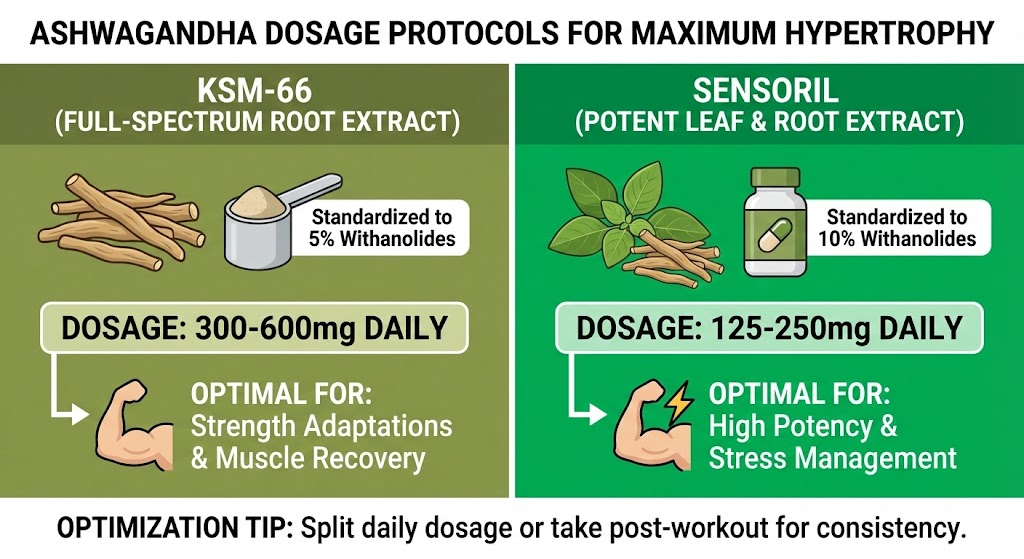
Ashwagandha Dosage Protocols for Maximum Hypertrophy
Optimizing ashwagandha for muscle growth requires understanding extract standardization and timing protocols. The two primary patented extracts dominating the fitness market are KSM-66 and Sensoril. KSM-66, a full-spectrum root extract standardized to 5% withanolides, typically requires dosing between 300-600mg daily for strength adaptations. Sensoril, a more potent leaf and root extract with 10% withanolides, performs well at 125-250mg daily.
For hypertrophy-focused athletes, KSM-66 often proves preferable due to its comprehensive phytonutrient profile that mirrors traditional Ayurvedic preparations. The optimal timing remains somewhat flexible; however, many practitioners recommend morning administration on an empty stomach to align with natural cortisol rhythms, or pre-workout (60 minutes prior) to capitalize on acute strength enhancement effects.
Cycling protocols suggest 8-12 weeks of consistent use followed by a 2-week washout period to prevent receptor desensitization. Combining ashwagandha with piperine (black pepper extract) enhances bioavailability significantly, ensuring maximum uptake of active withanolides. When integrated alongside creatine monohydrate and essential amino acids, this adaptogen completes a natural anabolic stack that supports sustained muscle accretion without hormonal suppression.
Real-World Gym Benefits: Strength Gains, Recovery, and Endurance
Translating biochemical mechanisms into barbell performance, ashwagandha users consistently report measurable improvements across multiple training modalities. In controlled studies, resistance-trained individuals supplementing with ashwagandha demonstrated significantly greater increases in bench press and leg extension one-rep maxes compared to placebo groups. These strength gains likely stem from improved neuromuscular coordination and reduced central nervous system fatigue, allowing for greater force production during maximal attempts.
Beyond pure strength, recovery metrics show remarkable improvement. Athletes report reduced delayed onset muscle soreness (DOMS) and faster restoration of baseline strength within 24-48 hours post-training. This accelerated recovery enables higher training frequencies—a critical variable for natural hypertrophy. The adaptogen also demonstrates efficacy in improving VO2 max and cardiorespiratory endurance, making it valuable for athletes incorporating conditioning work without sacrificing muscle mass.
Perhaps most noticeable is the improvement in workout density and mental resilience. Users describe enhanced “aggression” and focus during training sessions without the jitters associated with high-stimulant pre-workouts. This psychological edge, combined with physiological preparedness, allows for more productive volume accumulation—the primary driver of muscle growth. Whether you’re a powerlifter peaking for competition or a bodybuilder pursuing hypertrophy, these performance enhancements translate directly to accelerated progress and reduced injury risk.
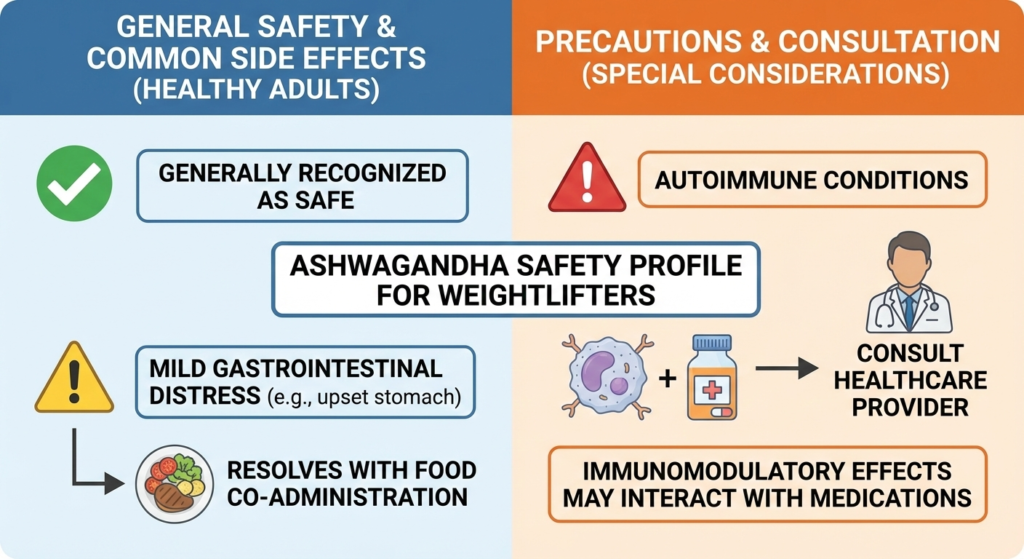
Safety Profile and Potential Side Effects for Weightlifters
While generally recognized as safe for healthy adults, ashwagandha requires consideration regarding individual physiology. Some users report mild gastrointestinal distress when initiating supplementation, typically resolving with food co-administration. Those with autoimmune conditions should consult healthcare providers, as the herb’s immunomodulatory effects may interact with certain medications.
Of particular note for serious athletes: ashwagandha may stimulate thyroid hormone production, potentially requiring dose adjustments for individuals on thyroid medications. As with any potent botanical, sourcing from reputable manufacturers ensures absence of heavy metals or adulterants that could compromise health or athletic eligibility.
Integrating Ashwagandha Into Your Muscle-Building Stack
For maximum synergistic effect, combine ashwagandha with creatine monohydrate (5g daily), whey protein isolate, and citrulline malate. This natural stack addresses strength, recovery, and nutrient delivery without hormonal shutdown. Prioritize consistency over eight weeks to fully experience the adaptogenic benefits, tracking progress through training logs and body composition measurements to quantify your results.