
Understanding L-Carnitine’s Role in Cellular Energy Production
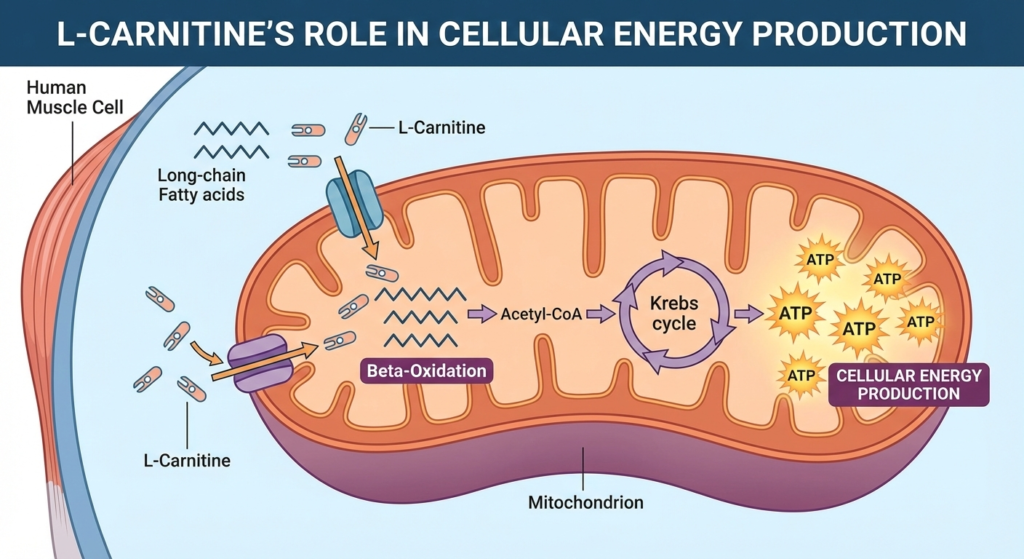
L-carnitine serves as an indispensable cofactor in cellular bioenergetics, functioning as the primary molecular shuttle for long-chain fatty acids into the mitochondrial matrix. This quaternary ammonium compound facilitates the carnitine shuttle system through carnitine palmitoyltransferase I (CPT1) and carnitine-acylcarnitine translocase (CACT), enabling fatty acids to cross the impermeable inner mitochondrial membrane for subsequent beta-oxidation. Without adequate l carnitine for fat loss protocols, lipids accumulate in the cytoplasm rather than entering mitochondria to undergo conversion into adenosine triphosphate (ATP), effectively bottlenecking the body’s primary fat-burning machinery.
While the body maintains sophisticated endogenous synthesis capabilities from lysine and methionine in the liver, kidneys, and brain, dietary bioavailability from sources including red meat, fish, poultry, and dairy contributes significantly to total muscle carnitine stores. Vegetarians, vegans, and adults over 50 frequently exhibit reduced biosynthetic enzyme activity and lower dietary intake, creating functional deficiencies that impair lipid oxidation rates. The compound’s fundamental connection to mitochondrial energy metabolism establishes why insufficient levels correlate with impaired metabolic flexibility, reduced exercise capacity, and compromised fatty acid utilization during caloric restriction phases.
Comprehensive Carnitine Benefits Beyond Weight Management
The therapeutic applications of carnitine supplementation extend far beyond simple adipose tissue reduction, encompassing multifaceted physiological improvements. Athletic populations consistently report enhanced exercise performance, increased work capacity, and significantly reduced muscle soreness following high-intensity eccentric training protocols. These carnitine benefits emerge from improved oxygen consumption kinetics, reduced purine nucleotide degradation, and enhanced blood flow regulation during demanding physical exertion, proving particularly valuable during hypocaloric periods when maintaining training intensity becomes metabolically challenging.
Neurobiological investigations demonstrate that acetyl-L-carnitine possesses distinct neuroprotective properties, supporting cognitive function, mood regulation, and cerebral energy metabolism through enhanced acetylcholine production and mitochondrial membrane phospholipid stabilization. Additionally, cardiovascular research indicates meaningful improvements in lipid profiles, with documented reductions in serum triglycerides, lipoprotein(a), and inflammatory markers alongside increases in high-density lipoprotein cholesterol. These systemic metabolic improvements create an internal environment conducive to sustainable body composition changes while supporting overall physiological resilience, immune function, and recovery capacity during demanding fat loss phases.
Optimal Carnitine Dosage for Fat Metabolism Support
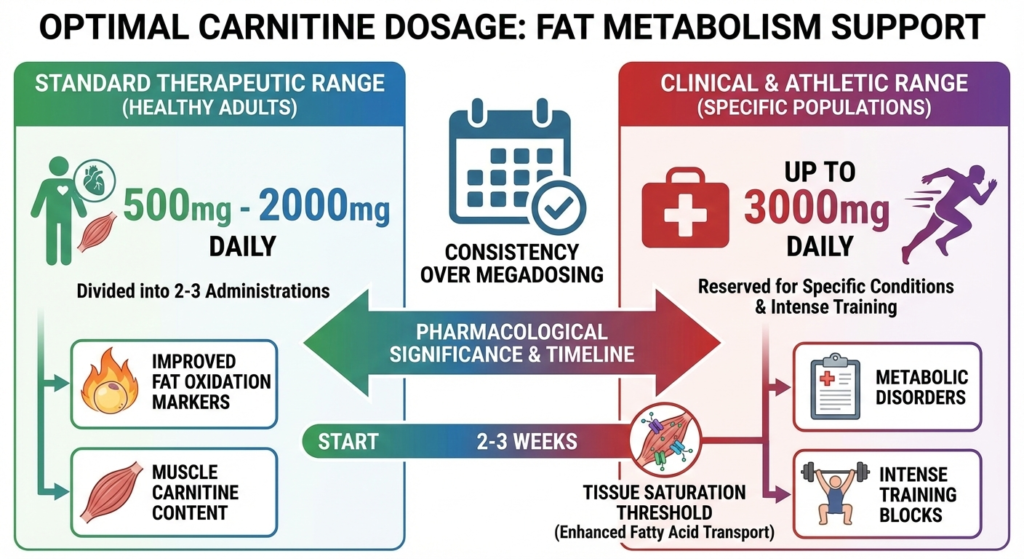
Establishing effective carnitine dosage protocols requires careful consideration of pharmacokinetic variables influencing tissue saturation and retention. Peer-reviewed research indicates that standard therapeutic ranges between 500mg and 2000mg daily, divided into two or three administrations, provide measurable improvements in fat oxidation markers and muscle carnitine content. Higher doses up to 3000mg typically remain reserved for clinical populations with specific metabolic disorders or competitive athletes undergoing intense training blocks. Consistency proves more pharmacologically significant than acute megadosing, as skeletal muscle requires approximately two to three weeks of daily administration to achieve concentration thresholds necessary for enhanced fatty acid transport.
Strategic timing protocols significantly influence efficacy as a fat metabolism supplement. Consuming carnitine alongside carbohydrate-containing meals stimulates insulin-mediated cellular uptake through OCTN2 transporters, potentially increasing muscle retention by 30-40% compared to fasted administration. Pre-workout consumption (30-45 minutes prior) may acutely improve training capacity and substrate utilization during exercise. Bioavailability factors including gastric pH, concurrent fat intake, and hydration status affect absorption rates, with liquid forms and acetyl-L-carnitine demonstrating superior plasma elevation compared to basic L-carnitine tartrate in pharmacokinetic studies.
Comparing Carnitine Forms: L-Carnitine Tartrate vs Acetyl-L-Carnitine
The specific molecular structure of carnitine derivatives determines their tissue distribution, bioavailability, and physiological applications. L-Carnitine Tartrate (LCLT) demonstrates rapid absorption kinetics and superior uptake into skeletal muscle tissue, making it the preferred choice for recovery enhancement, androgen receptor density upregulation, and exercise-induced muscle damage reduction. Conversely, Acetyl-L-Carnitine (ALCAR) contains an acetyl group that facilitates crossing of the blood-brain barrier, delivering neurological benefits alongside metabolic support through acetyl donor mechanisms and central nervous system energy production.
Propionyl-L-carnitine (PLC) offers distinct vascular advantages, particularly for individuals with peripheral arterial disease, endothelial dysfunction, or compromised circulation, through nitric oxide pathway modulation and capillary bed perfusion enhancement. Glycine propionyl-L-carnitine (GPLC) provides hybrid benefits particularly suited for endurance athletes requiring both muscular and cardiovascular support. When selecting specific forms for l carnitine for fat loss objectives, align molecular structure with individual fitness goals: LCLT optimizes physical performance and recovery, ALCAR supports cognitive function and focus during caloric deficits, while GPLC addresses vascular efficiency during high-volume training phases.
Evidence-Based Carnitine Review: Analyzing Clinical Research
Contemporary meta-analyses and systematic reviews reveal modest but statistically significant improvements in body composition parameters when carnitine supplementation accompanies structured exercise and nutritional interventions. A comprehensive 2024 meta-analysis published in the Journal of the International Society of Sports Nutrition demonstrated that participants combining carnitine supplementation with resistance training experienced significantly greater reductions in fat mass percentage and waist circumference compared to placebo groups, particularly when supplementation protocols exceeded 12 weeks duration and included carbohydrate co-ingestion strategies.
Population-specific efficacy demonstrates considerable heterogeneity. Elderly individuals exhibit pronounced benefits due to age-related declines in endogenous synthesis and reduced dietary protein intake, while strict vegan and vegetarian populations show enhanced responses attributable to substantially lower baseline carnitine status. Competitive athletic populations experience primarily ergogenic and recovery benefits rather than direct adipolytic effects. However, study limitations including heterogeneous dosing protocols, varying exercise modalities, inconsistent dietary controls, and differences in baseline carnitine status contribute to outcome variability across trials. A 2024 randomized controlled trial further highlighted that carnitine’s fat oxidation effects become most apparent when combined with omega-3 fatty acid co-administration, suggesting nutrient synergy and membrane fluidity play crucial roles in determining individual response rates and metabolic outcomes.
Strategic Implementation as a Fat Metabolism Supplement
Maximizing the efficacy of l carnitine for fat loss requires sophisticated nutritional stacking rather than isolated administration. Combining carnitine with omega-3 fatty acids, particularly eicosapentaenoic acid (EPA) and docosahexaenoic acid (DHA), enhances cellular membrane fluidity and insulin sensitivity, creating superior physiological conditions for fatty acid transport and mitochondrial entry. Conjugated linoleic acid (CLA) represents another synergistic compound that, when paired with carnitine, may amplify lipolytic signaling through peroxisome proliferator-activated receptor-gamma (PPAR-γ) pathway modulation and adipocyte differentiation regulation.
Dietary prerequisites significantly influence bioavailability and tissue retention. Consuming carnitine alongside 30-40 grams of high-glycemic or complex carbohydrates stimulates insulin release, facilitating cellular uptake into muscle tissue through sodium-dependent transporters. Training modality combinations prove equally important for optimizing this fat metabolism supplement; steady-state cardiovascular exercise performed at 60-70% VO2 max complements carnitine’s oxidation mechanisms directly, while high-intensity interval training capitalizes on its lactate buffering properties and anaerobic threshold enhancement. For optimal body composition results, implement carnitine during periods of controlled negative energy balance while maintaining adequate protein intake (1.6-2.2g per kg bodyweight) to preserve lean mass during accelerated fat metabolism phases.

Safety Profile and Potential Contraindications
The safety profile of carnitine supplementation remains remarkably favorable across diverse demographic populations, with decades of clinical use supporting its generally recognized as safe (GRAS) status. Most users tolerate standard therapeutic doses without adverse effects, though documented side effects primarily involve mild gastrointestinal disturbances including nausea, diarrhea, abdominal cramping, and fishy body odor resulting from trimethylamine accumulation. These tolerability issues typically resolve with dose reduction, divided dosing schedules, or consumption with substantial meals, rarely necessitating discontinuation when proper carnitine dosage protocols are followed.
Specific pharmacological contraindications require medical supervision and monitoring. Carnitine may potentiate the biological effects of thyroid hormones through enhanced cellular uptake and receptor sensitivity, necessitating caution and potential dose adjustments for individuals on levothyroxine or liothyronine replacement therapy. Warfarin users should monitor International Normalized Ratio (INR) levels closely due to potential interactions affecting anticoagulation stability and vitamin K metabolism. Pregnant and breastfeeding women should consult healthcare providers before initiating supplementation due to limited long-term safety data, while those with renal insufficiency or end-stage kidney disease require modified dosing schedules due to altered clearance mechanisms and potential accumulation.
Quality Markers and Purchasing Guidelines
Navigating the complex supplement marketplace requires vigilance regarding manufacturing standards, raw material sourcing, and quality assurance protocols. Prioritize products bearing third-party testing certifications from independent organizations such as NSF International, Informed Sport, Banned Substances Control Group (BSCG), or USP Verified, ensuring label accuracy, absence of heavy metals, and verification of pharmaceutical-grade purity. Critical quality differentiation involves verifying the “L” stereoisomer configuration, as D-carnitine represents a biologically inactive enantiomer that may actually deplete active L-carnitine stores through competitive inhibition of transport proteins and metabolic enzymes.
Bioavailability considerations significantly influence delivery format selection and storage requirements. Liquid formulations offer rapid absorption kinetics suitable for pre-workout timing and individuals with digestive sensitivities, while encapsulated forms provide convenience, improved stability against humidity, and precise dosing. Enteric-coated tablets may enhance absorption for some users. Regardless of format, verify that the supplement contains pure L-carnitine or specified derivatives rather than proprietary blends obscuring actual dosages. Reputable manufacturers transparently disclose raw material sourcing from fermentation processes (preferred over chemical synthesis), provide certificates of analysis confirming 99%+ purity standards, and maintain cGMP (current Good Manufacturing Practice) certification for this essential fat metabolism supplement.