

The Critical Link Between Magnesium and Physical Recovery
Magnesium operates as the biochemical linchpin for over 300 enzymatic reactions governing human metabolism, yet remains chronically underappreciated in athletic performance protocols. This essential macromineral serves as the literal spark for adenosine triphosphate (ATP) production—the cellular currency powering every contraction, repair mechanism, and protein synthesis cascade within your musculature. Without adequate magnesium stores, the recovery cascade stalls; calcium channels malfunction, oxidative stress accumulates, and the inflammatory response required for tissue remodelling becomes dysregulated. Research indicates that up to 80% of athletes operate in subclinical deficiency states, manifesting not as acute illness but as persistent fatigue, prolonged soreness, and compromised adaptation to training stimuli. For active individuals seeking to optimise their physiological resilience, understanding magnesium’s role in energy metabolism and cellular repair represents a fundamental prerequisite for sustainable performance.
Magnesium Muscle Recovery: Reducing Cramps and Exercise-Induced Damage
The mechanisms underlying magnesium muscle recovery extend far beyond simple electrolyte replacement. At the cellular level, magnesium functions as a natural calcium antagonist, regulating neuromuscular excitability by blocking excessive calcium influx into muscle fibres. When magnesium levels drop, calcium floods the sarcoplasmic reticulum, triggering involuntary contractions and the debilitating cramps that plague endurance athletes during prolonged exertion. Beyond cramp prevention, magnesium actively buffers lactic acid accumulation by serving as a cofactor for lactate dehydrogenase, the enzyme responsible for converting metabolic waste into usable pyruvate for energy regeneration.
For strength athletes, magnesium’s influence on protein synthesis proves equally critical. The mineral activates mTOR pathways and ribosomal function, directly accelerating the repair of microtears inflicted during resistance training. Simultaneously, magnesium modulates cortisol clearance, preventing the catabolic hormone from prolonging muscle breakdown phases. Endurance practitioners benefit from enhanced oxygen utilisation and reduced exercise-induced inflammation, as magnesium downregulates pro-inflammatory cytokines while upregulating antioxidant enzymes like glutathione peroxidase. Maintaining optimal electrolyte balance through adequate magnesium status ensures proper nerve conduction and prevents the compensatory sodium imbalances that frequently masquerade as chronic fatigue in high-volume training blocks.
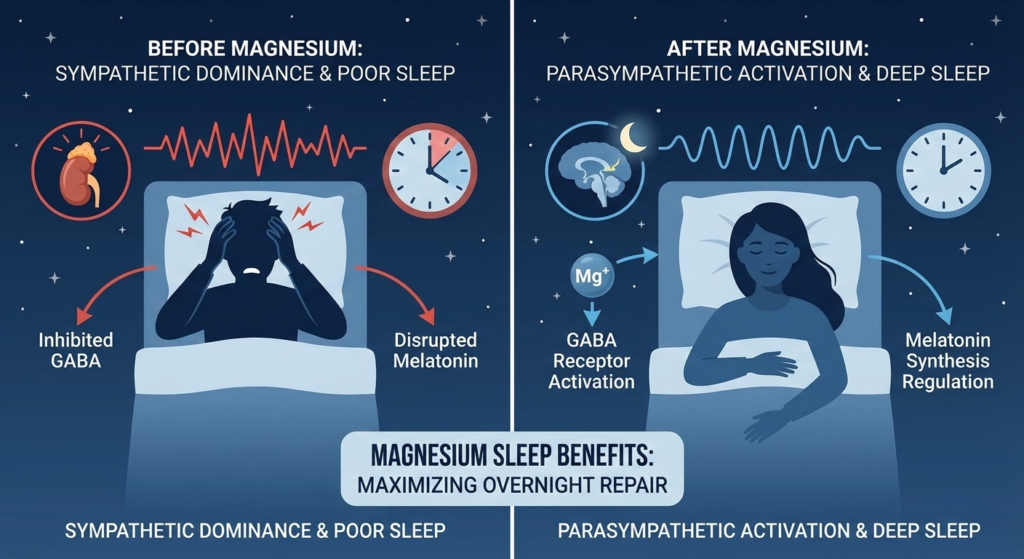
Magnesium Sleep Benefits: Maximizing Overnight Repair Cycles
Nocturnal recovery represents the primary window for physiological adaptation, and magnesium sleep benefits position this mineral as a non-negotiable component of any serious regeneration protocol. Magnesium activates gamma-aminobutyric acid (GABA) receptors, the brain’s primary inhibitory neurotransmitters, effectively quieting the sympathetic nervous system and facilitating the transition into parasympathetic dominance required for deep sleep initiation. Concurrently, magnesium regulates melatonin synthesis by modulating the pineal gland’s conversion of serotonin, synchronising circadian rhythms with environmental light-dark cycles.
The mineral’s impact on sleep architecture directly correlates with tissue repair capacity. Deep sleep stages trigger pulses of growth hormone release—essential for collagen synthesis, muscle fibre thickening, and glycogen supercompensation. Magnesium-deficient athletes frequently experience fragmented sleep patterns and reduced slow-wave activity, effectively nullifying these anabolic hormonal cascades. By maintaining thalamic-cortical neuronal stability throughout the night, magnesium ensures uninterrupted sleep cycles that maximise autophagy, the cellular cleaning process that removes damaged proteins and prepares musculature for subsequent training demands.
Magnesium Dosage for Athletes: Precision Guidelines by Activity Level
Determining optimal magnesium dosage for athletes requires moving beyond standard Recommended Dietary Allowances (RDAs) of 310-420mg, which address sedentary populations rather than individuals experiencing significant metabolic and sweat losses. Competitive athletes typically require 400-600mg of elemental magnesium daily, with precise needs scaling according to training intensity, ambient temperature, and individual sweat sodium concentrations. High-volume endurance athletes or those training in humid conditions may necessitate the upper threshold due to substantial dermal magnesium excretion—studies suggest sweat losses can exceed 20mg per litre during intense sessions.
Bioindividuality plays a crucial role in dosing strategies. Athletes with existing deficiencies may benefit from therapeutic loading phases of 600-800mg, divided across multiple servings to enhance absorption and minimise osmotic laxative effects. Timing protocols significantly influence efficacy: post-workout supplementation capitalises on heightened insulin sensitivity and nutrient partitioning, while evening doses leverage the mineral’s GABA-ergic properties to enhance sleep quality. Split dosing—200-300mg immediately post-exercise and 200-300mg before sleep—often yields superior results compared to single bolus administration, maintaining stable serum levels throughout the recovery window.
Magnesium Supplement Guide: Forms, Absorption, and Quality Markers
Navigating the supplement marketplace requires discernment, as bioavailability varies dramatically across chemical formulations. This magnesium supplement guide prioritises chelated forms that bypass common absorption barriers. Magnesium glycinate offers superior bioavailability alongside glycine’s additional calming properties, making it ideal for evening protocols. Magnesium citrate provides excellent absorption rates with mild osmotic effects beneficial for athletes managing training-induced constipation. Magnesium malate, bound to malic acid, specifically supports ATP production and fibromyalgia-related muscle pain, while magnesium oxide—though inexpensive—demonstrates poor solubility and should generally be avoided despite its high elemental magnesium percentage.
Quality assessment criteria include third-party testing certifications (NSF Certified for Sport, Informed Choice), transparent elemental magnesium labelling distinguishing compound weight from actual mineral content, and the absence of unnecessary fillers, artificial dyes, or titanium dioxide. For athletes with compromised digestive function or those seeking localised relief, transdermal magnesium chloride applications offer direct dermal absorption, bypassing gastrointestinal limitations entirely. Topical sprays and bath flakes deliver magnesium through the skin’s porous barrier, particularly effective for targeting specific muscle groups experiencing delayed onset muscle soreness.
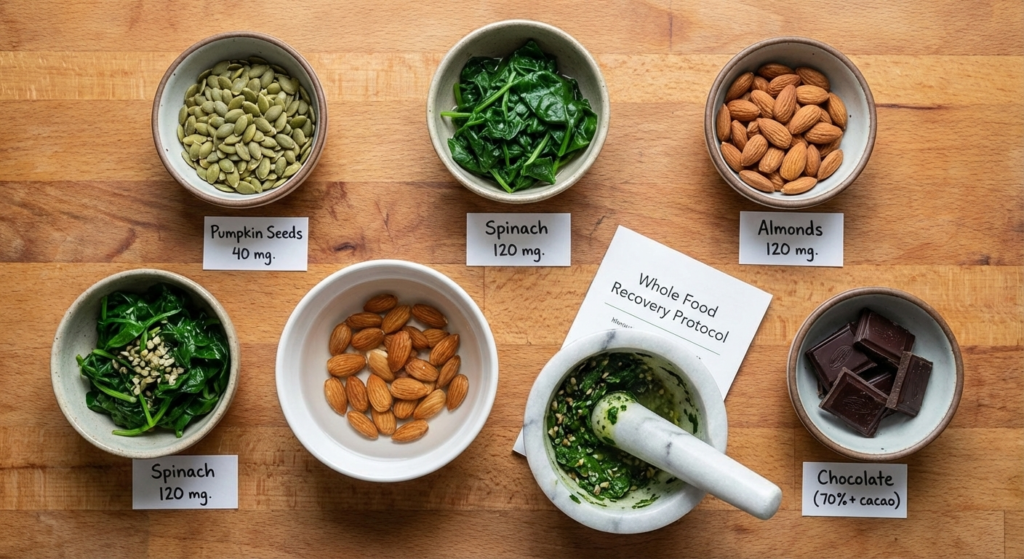
Whole Food Strategies to Support Your Recovery Protocol
While supplementation addresses acute deficiencies, foundational nutrition establishes the mineral reserves necessary for consistent magnesium for recovery outcomes. Prioritise bioavailable plant sources: pumpkin seeds provide 156mg per 28g serving, cooked spinach delivers 157mg per cup, almonds offer 80mg per ounce, and dark chocolate (70% cacao minimum) contributes 64mg per ounce alongside beneficial flavonoids. Soaking, sprouting, or fermenting these foods reduces phytic acid content, enhancing mineral absorption by up to 30%.
Nutrient synergy amplifies magnesium utilisation. Vitamin D facilitates magnesium transport across cellular membranes, while vitamin B6 (pyridoxine) enhances magnesium retention within muscle cells and supports neurotransmitter synthesis. Consuming magnesium-rich foods alongside healthy fats improves absorption, whereas excessive calcium or zinc supplementation taken concurrently may create competitive inhibition. Strategic meal timing—incorporating magnesium-dense greens and seeds into post-workout smoothies—capitalises on the body’s heightened anabolic state, ensuring these critical cofactors reach depleted tissues when demand peaks.
Implementation Strategies for Consistent Recovery Enhancement
Optimising recovery through magnesium requires systematic implementation rather than sporadic supplementation. Begin by assessing current status through serum magnesium testing or symptom evaluation, then establish a baseline protocol combining dietary prioritisation with targeted supplementation. Current research continues to explore magnesium’s role in exercise immunology and mitochondrial biogenesis, suggesting emerging applications for periodisation strategies. Track subjective markers including sleep quality, muscle cramp frequency, and next-day readiness scores to calibrate dosing. Whether you’re a strength athlete seeking enhanced protein synthesis or an endurance competitor managing electrolyte balance, consistent magnesium optimisation represents one of the highest-impact, lowest-risk interventions available for accelerating recovery and sustaining peak performance throughout your athletic career.